Wealth Path
Shows your stage and next steps, so the house goal waits until debt and the emergency fund are handled.

Hoarding Wealth is a budgeting and personal finance learning app that helps first-time buyers get ready to buy a home by putting the steps in order: high-interest debt gone, emergency fund full, then the down payment saved as its own goal. You see how far along you are from the months you have actually lived, not from a guess.
Start freeYou open a savings account for the house, put money in for a few months, and then the car breaks down. The house fund pays for it. Or a credit card keeps charging high interest while the down payment earns very little. A year later, the account is back where it started.
The problem usually isn't willpower. It's that one pile of money is doing three jobs: emergency fund, debt payoff and down payment. A home also costs more than the price tag. There are closing costs, moving and setup, and a monthly payment that includes property taxes, insurance and often PMI. Buyers who plan only for the down payment can find themselves short at the closing table or stretched every month after it.
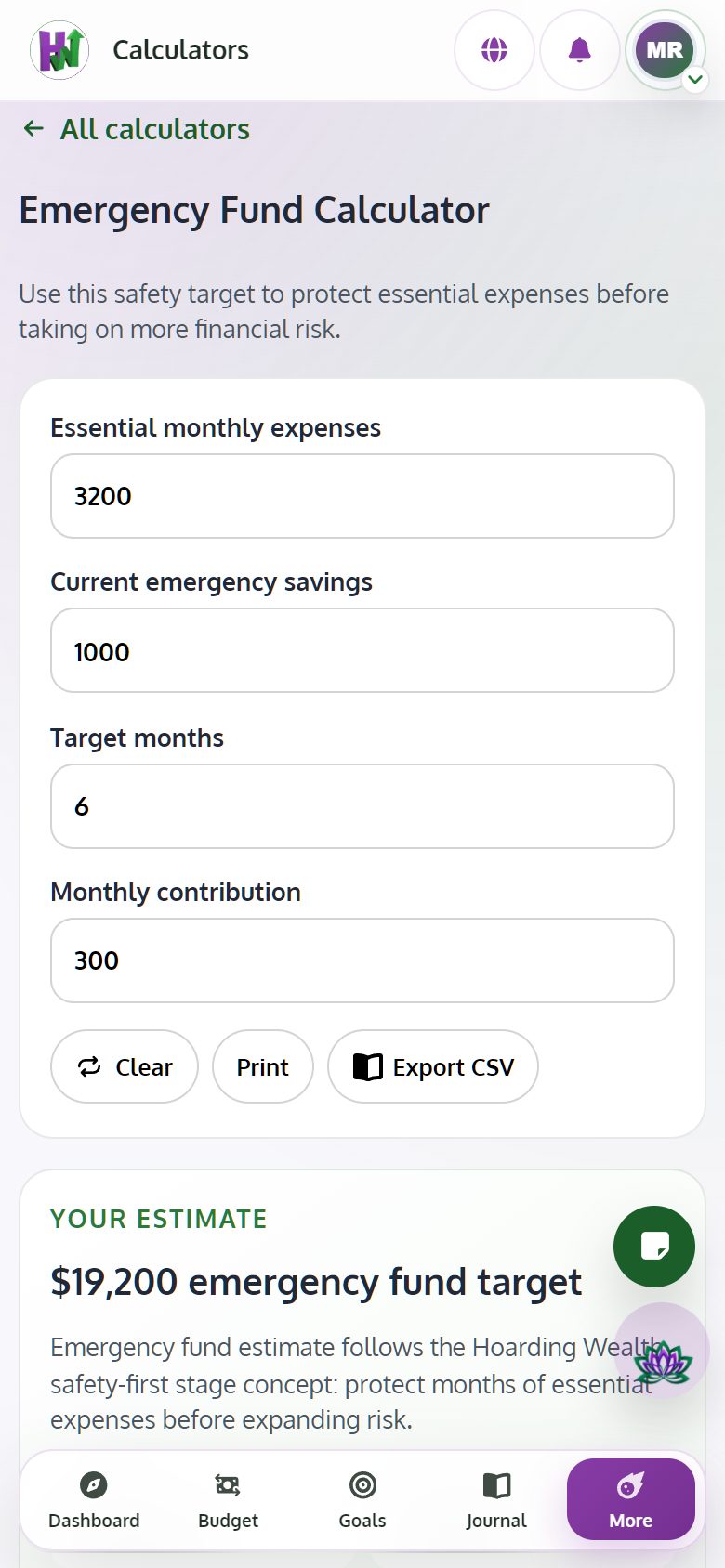
Your Wealth Path shows which stage you are in, from your closed months: Budget, Debt, Emergency fund, Investing or Wealth. High-interest debt comes first, then an emergency fund of 3 to 6 months of essential expenses. While you are still in those stages, your goals say so plainly: "Eliminate debt before funding goals" or "Build your emergency fund before funding goals."
Why: A buyer with no emergency fund is one repair away from new debt, and a new home has plenty of repairs.
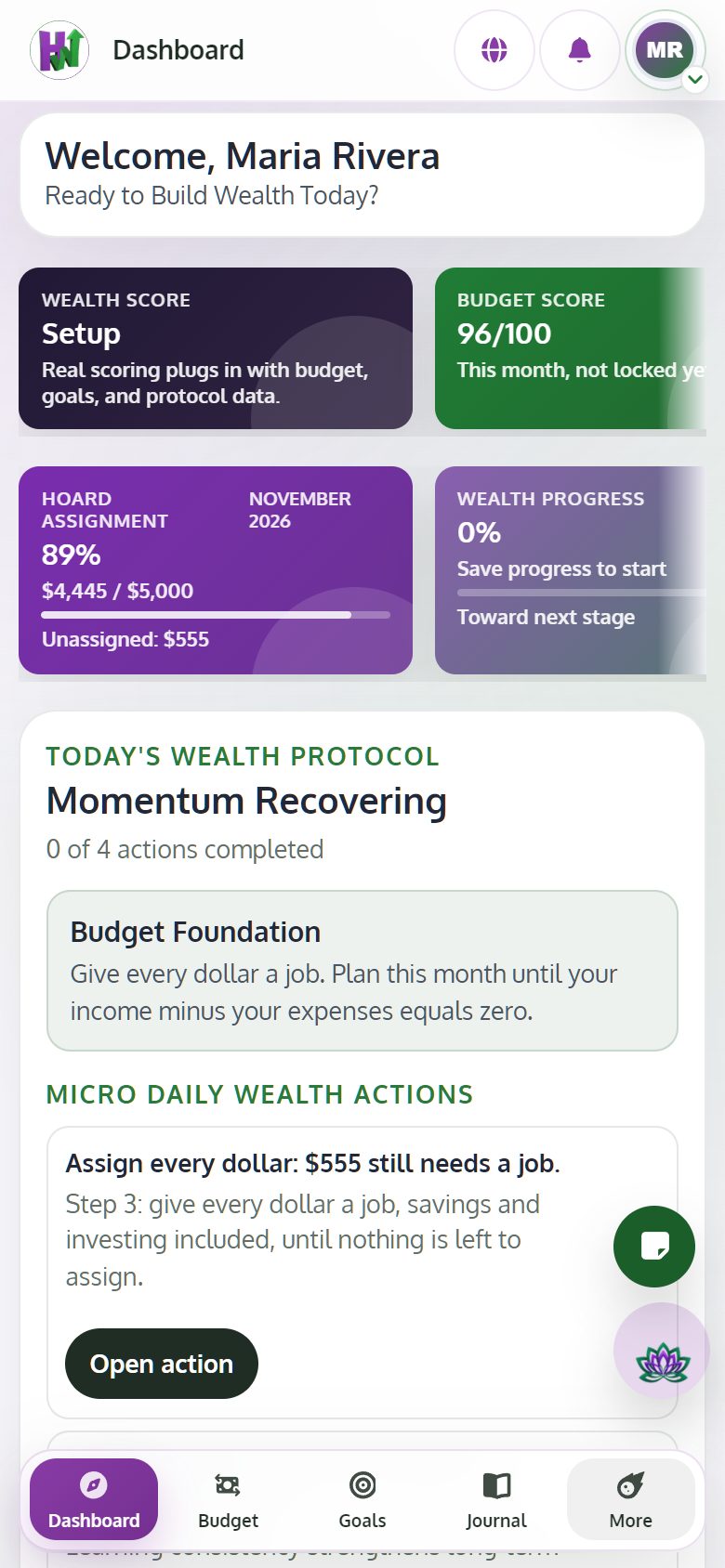
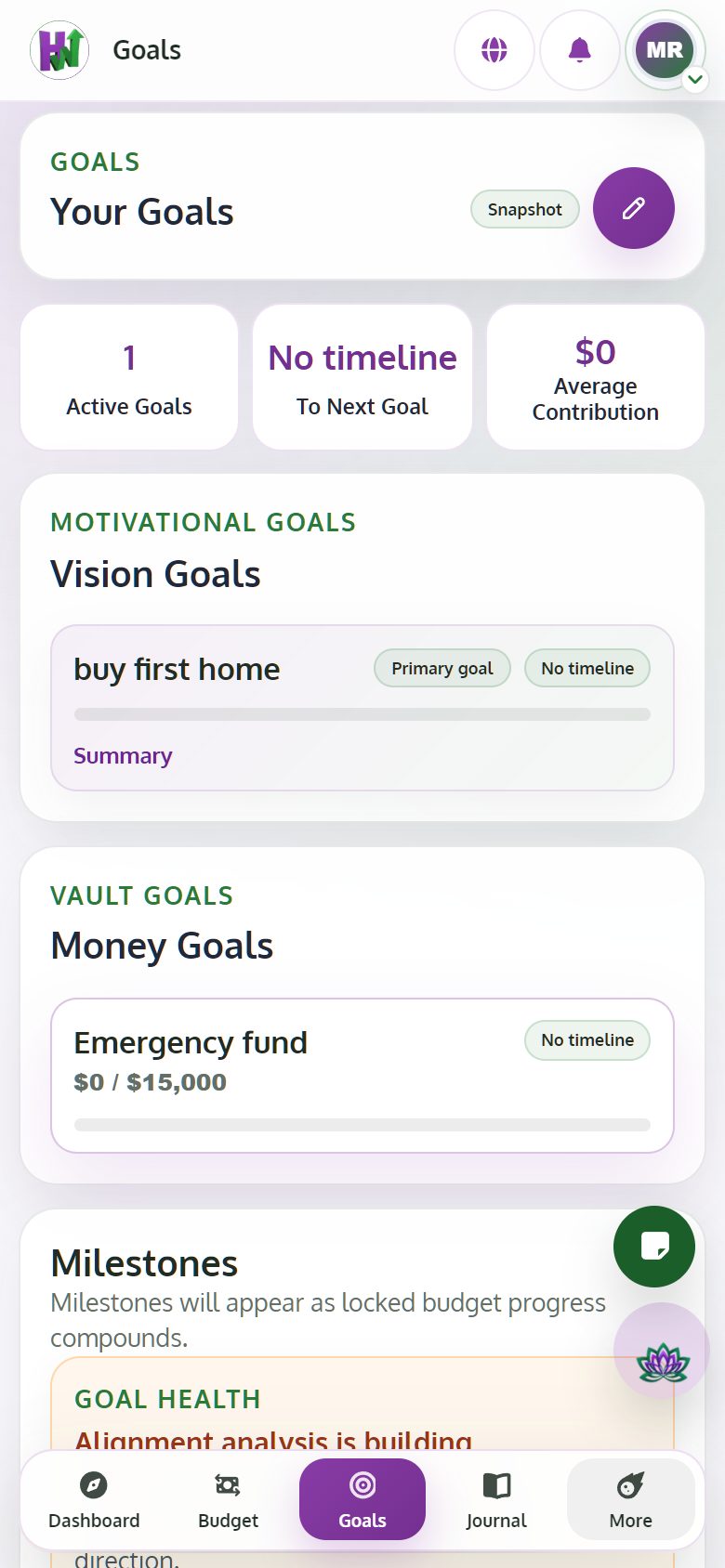
Pick the "Buy my first home" goal and give it a monthly line in your zero-based budget. Plan for more than the down payment: closing costs and moving and setup belong in the same target. Keep your regular retirement investing going at the same time; the house is saved for alongside it, not instead of it.
With Premium, the saving line goes into a Savings Vault, such as a down payment vault, so it never mixes with the emergency fund. The What-if slider lets you add $0 to $200 a month and see how many months sooner you would reach the target.
The free mortgage calculator takes the home price, down payment, rate, term, property taxes, insurance, PMI and points. Test the real monthly cost of owning against your budget while you are still renting.
In Wealth Journey, ask "When can I buy a home?" You get a short answer with charts: your home readiness over time, your down payment savings and a line such as "At your current pace, you could be ready to buy a home in about X years." It is an estimate from your closed months, not a promise.
Shows your stage and next steps, so the house goal waits until debt and the emergency fund are handled.
A planned line for the house every month, with Planned and Actual, so you see what you really saved.
One goal on the free plan. Premium adds unlimited goals with AI projections.
A separate vault for the down payment, with a What-if slider that shows how much sooner extra money gets you there.
Full monthly cost with taxes, insurance, PMI and points. Free, also on the public site.
Ask "When can I buy a home?" and see an estimate of your home readiness from your own months. Free.
Hoarding Wealth doesn't search for homes, compare lenders, check your credit or get you pre-approved. For that you will need a lender, and many first-time buyers also talk to a housing counselor. The app gets your budget and savings ready for that conversation.
The readiness estimate uses simplified math from the months you have closed. A new job, a rate change or a big repair can move the date. You type your own numbers; the app doesn't connect to your bank and never moves money.
If you already have the cash saved and only want to compare loan offers, a lender or mortgage broker will serve you better.
Yes. In the Hoarding Wealth method, high-interest debt is cleared first and the emergency fund is filled next. The down payment comes after that, while your regular retirement investing continues.
No. The emergency fund stays whole, because a new home brings repairs a landlord used to pay for. Save the down payment, closing costs and setup costs as a separate goal.
Closing costs and moving and setup costs. In an example with a $300,000 home and 10% down ($30,000), closing costs at 3% of the $270,000 loan are about $8,100 and setup is $2,000, so the cash needed is about $40,100 in total.
Yes, as an estimate. Ask "When can I buy a home?" in Wealth Journey and it shows your home readiness and an approximate number of years at your current pace, based on your closed months. It is not a promise.
No. It doesn't offer loans, pre-approval or home listings. It helps you budget and save so you arrive at the lender ready.
A clear order from your first budget to your first investment, so you always know the next step.
See how it helpsKnow when extra principal makes sense in your order, then plan it as a line of its own every month.
See how it helpsA small cushion first, no new charges, then every extra dollar to the highest-interest card, with a tracker that shows your pace.
See how it helpsTake the free Money Personality assessment, plan your first month and see which stage you are in.
Start free