Total Debt Tracker
One starting total, then paid down, remaining, recent pace, percent paid and months at the recent pace. Free.

Hoarding Wealth is a budgeting and personal finance learning app that helps people pay off credit card debt by building a small Emergency Buffer first, stopping new charges and sending every extra dollar to the highest-interest debt, all inside a monthly budget. A free Total Debt Tracker shows how much you've paid down and your recent pace.
Start freeYou pay the card every month, sometimes more than the minimum, and the balance barely moves. Part of each payment goes to interest. Then the car needs tires or a school trip comes up, there's no money set aside, and it goes back on the card. Months of progress disappear in one week.
Paying harder doesn't fix that loop by itself. What breaks it is doing things in the right order: a small cushion so surprises stop landing on the card, no new charges for things you want, and one clear target for every extra dollar.
While you're in the Debt stage, the first goal is a small Emergency Buffer: $2,000, or 55% of your monthly income if you earn less than $2,000. For example, on $1,800 a month the buffer is $990. With it in place, a flat tire gets paid from savings instead of the card.
Why: Without a cushion, every surprise becomes new debt and undoes your payments.
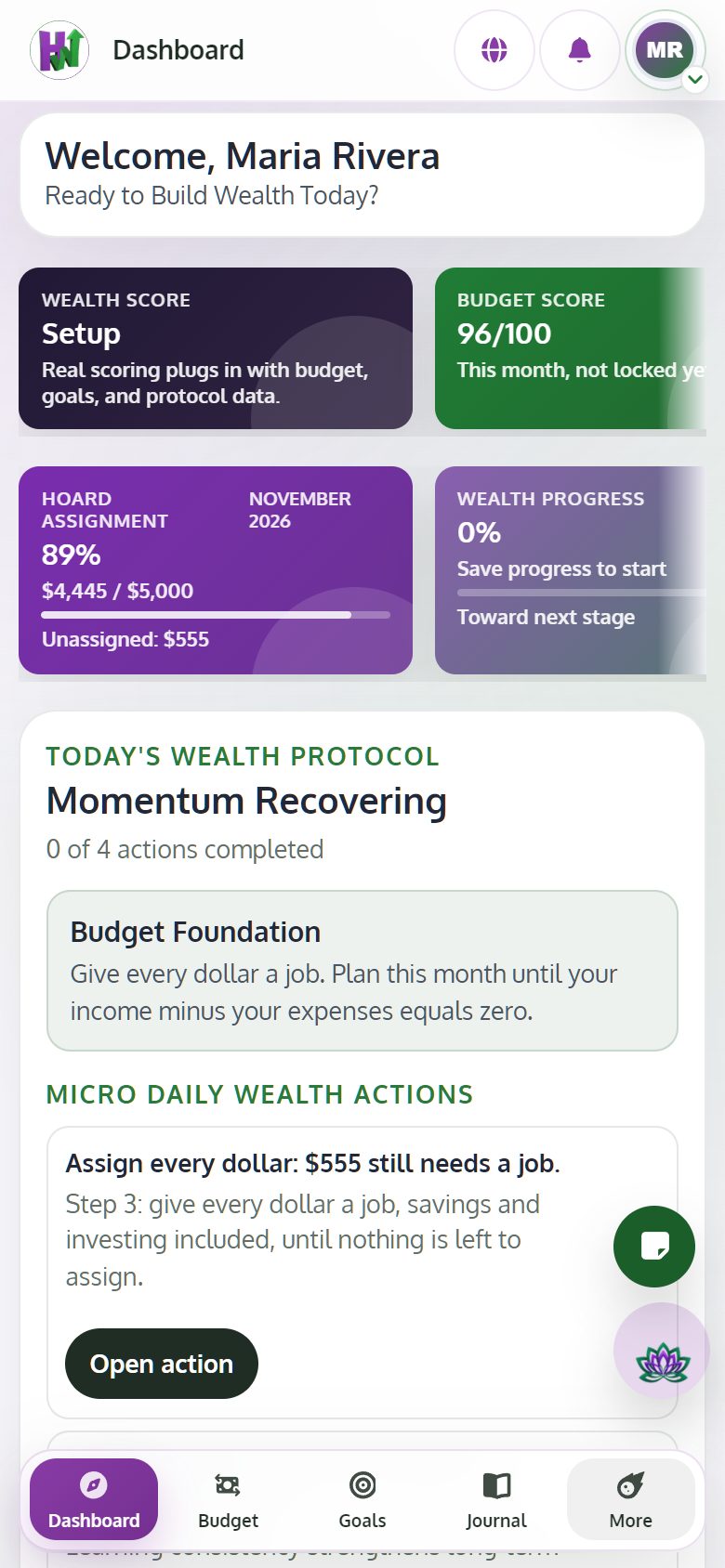
In a zero-based budget, every dollar gets a job before the month starts: bills, groceries, gas, the minimum on every card and the money you're putting toward debt. When the plan covers real life, you can leave the card at home. Wants that don't fit wait for next month instead of going on credit.
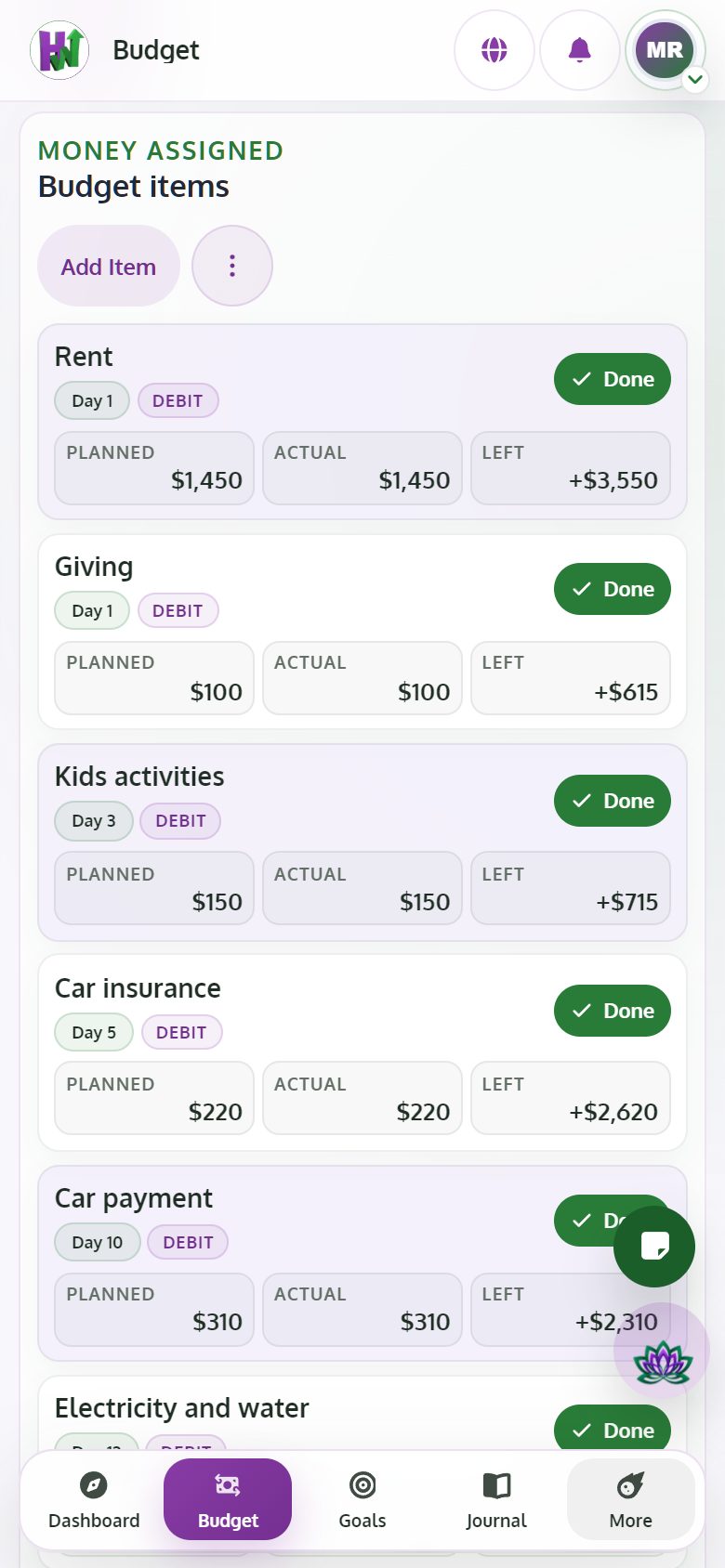
Once the buffer is full, the Wealth Path advice is simple: pay the minimum on everything, then put every extra dollar on the debt with the highest interest rate. Give each card its own line in the Debt category and write its rate in the line note, so you always know which one is the target.
In the Total Debt Tracker you type your starting debt once. As you close months, it adds up what you paid on Debt lines and shows paid down, remaining, your recent monthly pace, the percent paid and how many months are left at that pace. Example: a $9,000 starting total with $1,500 paid over three months is a pace of about $500 a month, 17% paid, $7,500 remaining and 15 months at the recent pace.
Your stage comes from your closed months. When the latest closed month has nothing in the Debt category, you leave the Debt stage. For most people the next stop is the Emergency stage: building 3 to 6 months of essential expenses.
One starting total, then paid down, remaining, recent pace, percent paid and months at the recent pace. Free.
A line for every card payment, with due days and notes, so nothing is missed and nothing new goes on the card.
Shows you're in the Debt stage and what comes first: the Emergency Buffer, then extra payments, highest interest first.
Explains your plan and suggests one next step. It won't push aggressive investing while you're paying off debt, and it never moves money.
Write down what was going on when you reached for the card. Patterns are easier to change once you can see them.
The Total Debt Tracker follows one total. It doesn't list your cards one by one, store interest rates, put debts in order or plan extra payments. Because it doesn't know your rates, its "months at the recent pace" is a rough guide: interest keeps adding to the balance, so your card statement is the real number.
Hoarding Wealth doesn't connect to your bank or your cards, and it never moves money or makes payments. You type your own numbers.
If you want an app that builds a card-by-card payoff schedule with interest, or you're already behind on payments and need help negotiating with lenders, a nonprofit credit counselor or a dedicated debt tool will fit better.
The one with the highest interest rate, while you pay the minimum on the rest. That is the Hoarding Wealth Debt-stage advice. The app doesn't sort cards for you, so many people give each card its own budget line and note its rate there.
Yes, a small amount first. Hoarding Wealth asks for an Emergency Buffer of $2,000, or 55% of your monthly income if you earn less than $2,000, before extra payments, so a surprise doesn't go back on the card.
Use the savings above your Emergency Buffer, and keep the buffer itself. Emptying savings to zero means the next surprise goes back on the card.
The Total Debt Tracker shows how many months are left at your recent pace, based on what you paid in closed months. It doesn't include interest, so treat it as an estimate and check your statement.
Mostly no, with one exception: keep putting in enough to get any employer retirement match. Otherwise the Wealth Path puts investing after bad debt and the emergency fund.
No. Hoarding Wealth doesn't link to banks or cards. You type your balances and payments, and the app never moves money.
Match each bill to the paycheck before it, give every dollar a job and build a small cushion, one month at a time.
See how it helpsHourly, salary, gig or a small paycheck: the same order works, and the targets scale to what you earn.
See how it helpsA clear order from your first budget to your first investment, so you always know the next step.
See how it helpsTake the free Money Personality assessment, plan your first month and enter your starting debt.
Start free