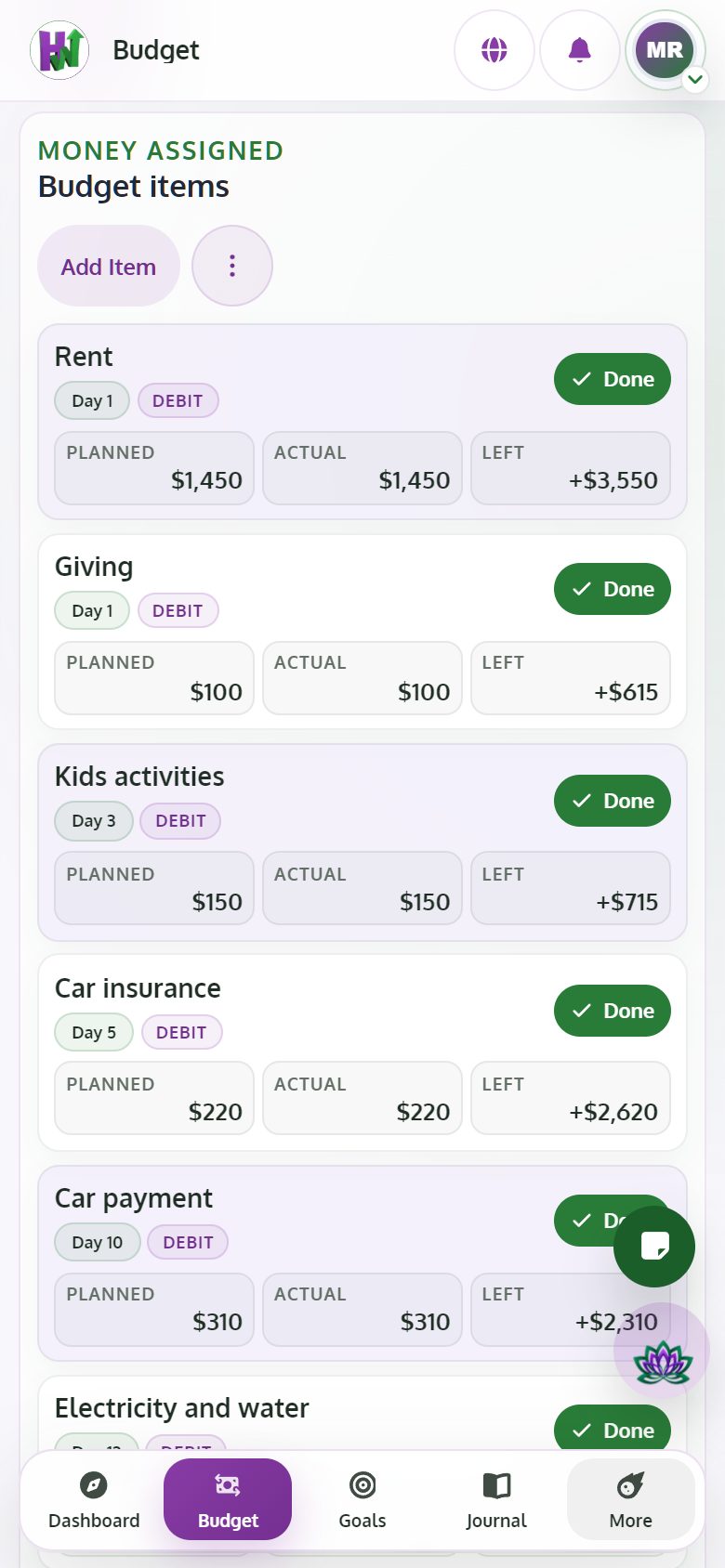
Zero-based budget
Planned and Actual for every line, with due days, notes and Mark Done.
Hoarding Wealth is a budgeting and personal finance learning app that helps people living paycheck to paycheck stop running out of money before payday by matching each bill to the paycheck that comes before it and giving every dollar a job before the month starts. Then it shows you what to build next, starting with a small cushion.
Start freeFor most people it isn't one big mistake. Rent takes almost all of the first check, so the next two weeks run on whatever is left. Payday feels like relief, a few small costs nobody planned for slip in, and by the 12th the account is close to zero again. The card or an overdraft covers the gap, and next month starts a little behind.
Earning more would help, but timing is often the bigger problem. A monthly budget can add up perfectly and still leave you short on the 10th. What changes things is seeing which bills each paycheck has to cover, deciding every dollar's job ahead of time, and setting aside a small cushion so one surprise doesn't restart the cycle.
In a zero-based budget, your take-home pay minus everything you plan equals zero: rent, food, gas, bills, minimum payments, savings and a little fun money. Nothing is left to figure out at the register.
Why: Money without a job tends to disappear into small purchases.
Give every line a due day, then use the week or calendar view, or sync to Google Calendar, to see what lands before each payday. Example: $2,800 a month in two $1,400 checks. The check on the 1st covers rent ($1,050), utilities ($150), two weeks of groceries ($150) and gas ($50). The check on the 15th covers the car payment ($300), insurance ($120), phone ($80), groceries ($150), gas ($70), the card minimum ($80), household costs ($200), savings ($250) and fun money ($150).
If you carry debt, your Wealth Path is in the Debt stage, and the first goal is an Emergency Buffer of $2,000, or 55% of your monthly income if you earn less than $2,000. In the example, $250 a month reaches $2,000 in 8 months. With no debt, you go straight to building 3 months of essential expenses.
Why: A cushion turns a flat tire into an expense instead of a new balance on the card.
On the free plan, next month opens in the last 5 days of the current one, so you can plan it before the first paycheck arrives. Each month planned ahead is one less month spent reacting.
When every line has its actual amount and is marked done, the month closes and you get a Budget Score. Look at what ran over and adjust next month's plan. Short free lessons explain the habits behind it.
Planned and Actual for every line, with due days, notes and Mark Done.
See which bills land before each payday, print the plan or sync it to Google Calendar.
Tells you what to build first: the Emergency Buffer, then debt, then a full emergency fund.
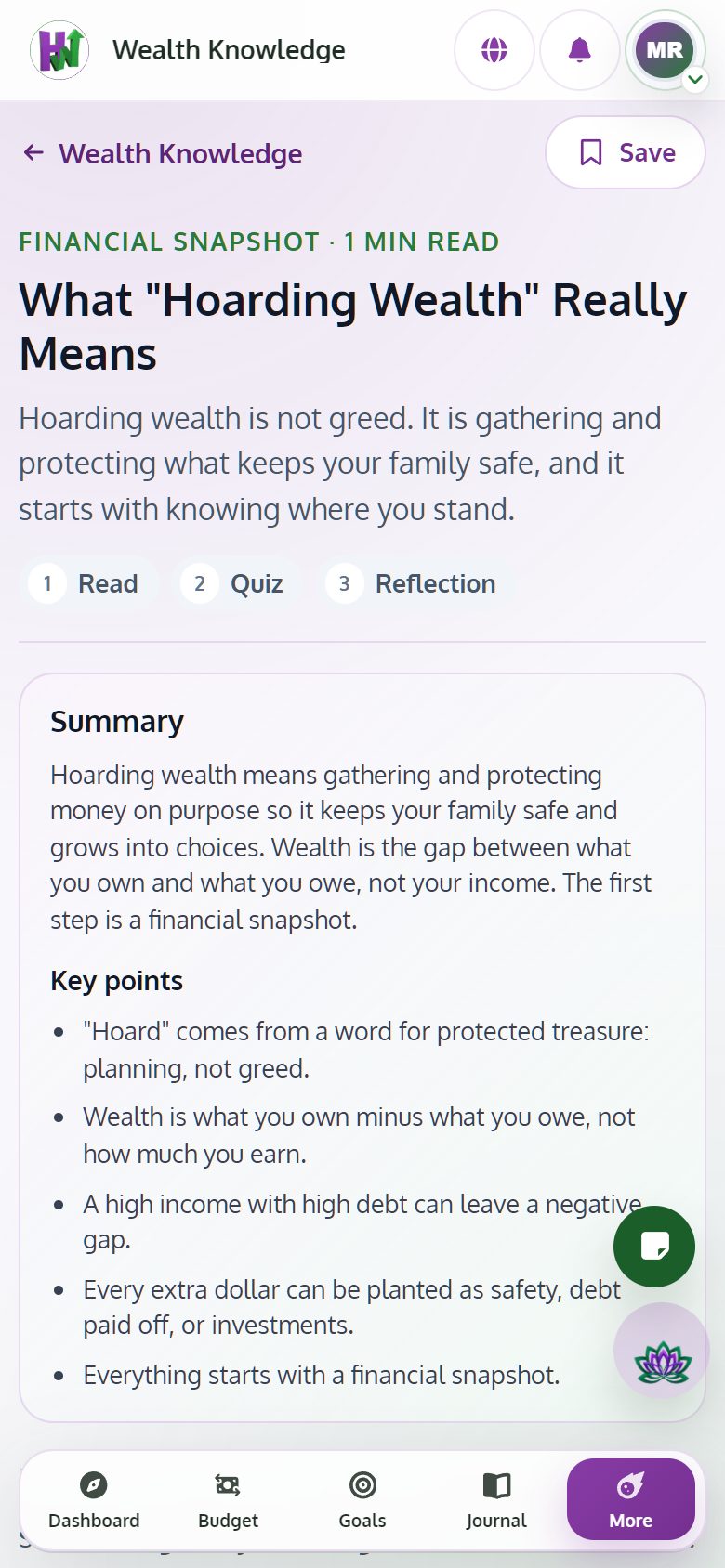
A free assessment of how you tend to handle money, so the plan fits how you really spend.
Set the bills that repeat and start each month from last month's plan, plus plan any month ahead.
Hoarding Wealth doesn't lend money, offer cash advances, pay bills or connect to your bank. You type your own numbers, and the app never moves money. What it gives you is a plan and a clear order.
If your essential costs are higher than your take-home pay, no budget can close that gap by itself. The plan will show it plainly, which is the first step to deciding what to change, and a nonprofit credit counselor or local assistance programs can help with the rest.
If you want an app that imports every transaction automatically or pays your bills for you, a different tool will fit better.
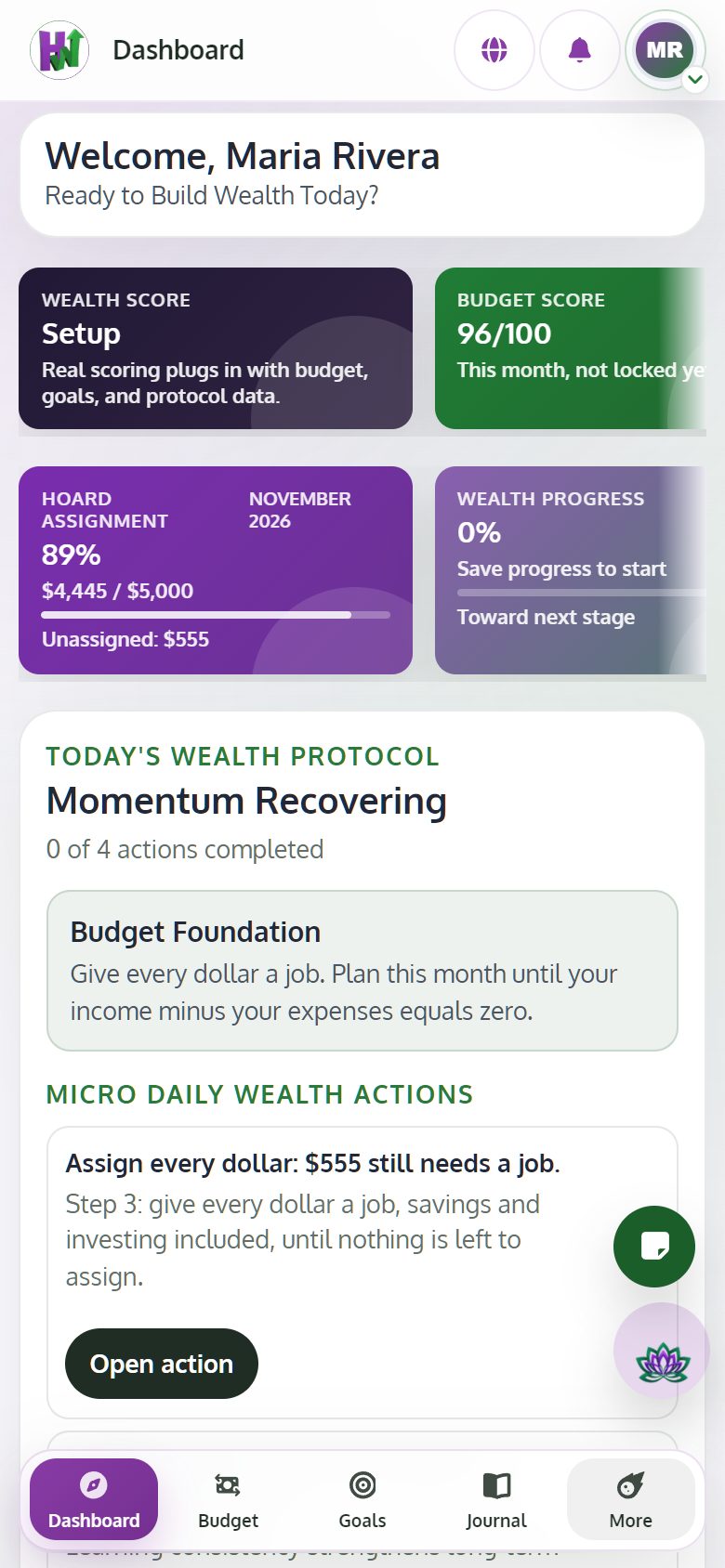
Start by giving every dollar a job before the month begins, matching each bill to the paycheck that comes before it, and building a small cushion. Hoarding Wealth's zero-based budget, due days and calendar view are built for those three steps.
Usually because of timing. A monthly plan can balance and still leave you short if big bills land right after one paycheck. Putting a due day on every bill shows which paycheck has to cover it.
If you have debt, start with an Emergency Buffer of $2,000, or 55% of your monthly income if you earn less than $2,000. With no debt, build toward 3 months of essential expenses.
No. Hoarding Wealth doesn't lend money or move money. It's a budget and learning app that helps you plan so you need advances less.
Yes, it's free to start. The free plan includes a full zero-based budget for the current month, the Wealth Path, the debt tracker, every lesson and the Money Personality assessment.
A small cushion first, no new charges, then every extra dollar to the highest-interest card, with a tracker that shows your pace.
See how it helpsPlan on the amount you can count on, give every extra dollar a job when it arrives, and build a cushion for slow months.
See how it helpsHourly, salary, gig or a small paycheck: the same order works, and the targets scale to what you earn.
See how it helpsTake the free Money Personality assessment and give every dollar of your next paycheck a job.
Start free