Zero-based budget
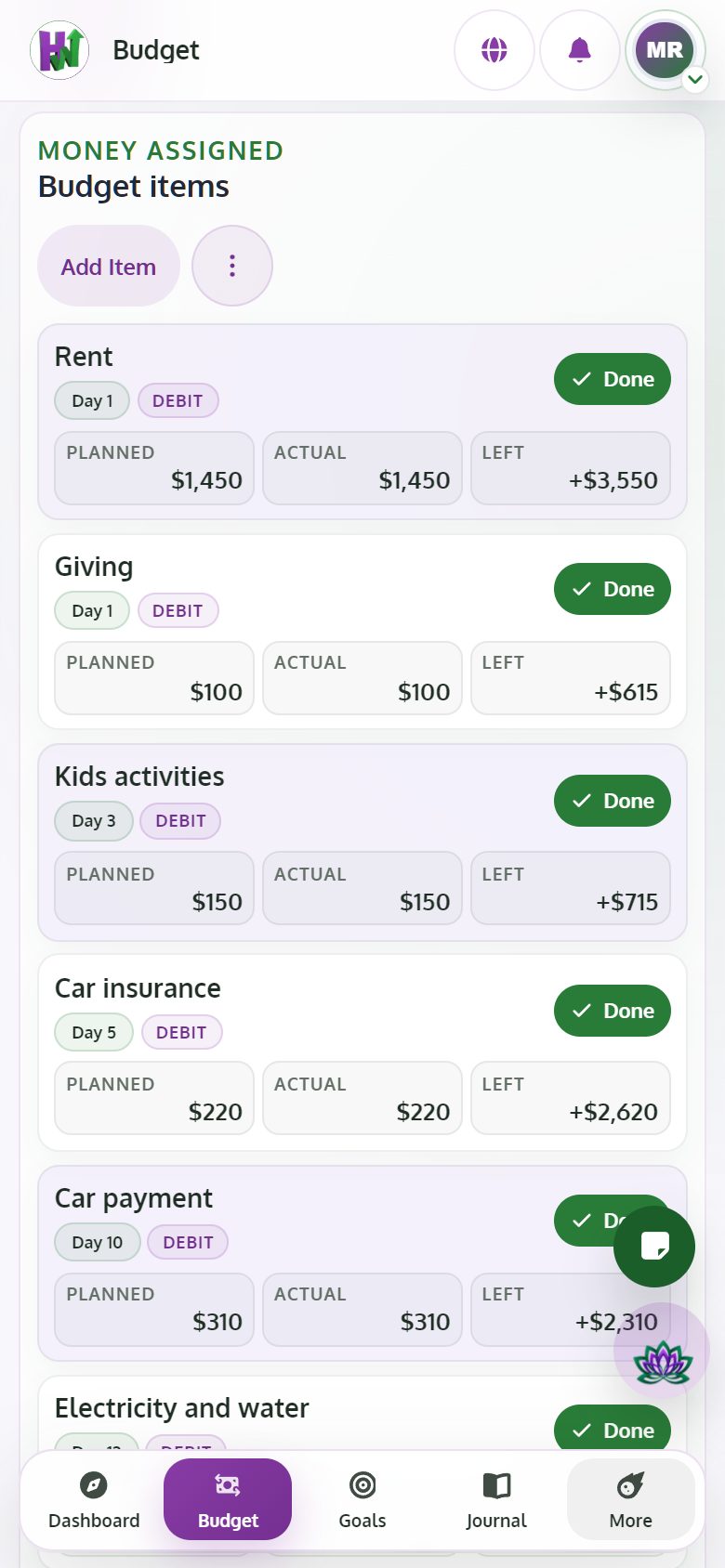
Planned and Actual for every line, due days and notes, in month, week, timeline and calendar views.

Hoarding Wealth is a budgeting and personal finance learning app that helps people with irregular income stop guessing each month by building the budget on the amount they can count on and giving every extra dollar a job when it arrives. It has no special irregular-income mode; it gives you a clear method and the tools to follow it.
Start freeMost budgets assume the same paycheck every month. If you drive for a delivery app, wait tables, sell on commission or work a seasonal job, that assumption is wrong half the time. A good month makes the plan feel too tight, so you spend freely. A slow month leaves rent short, and the card fills the gap.
The problem isn't that you can't budget. It's that you're planning on a number you don't have yet. The fix is to plan on the floor, decide ahead of time what extra money is for, and build a cushion big enough that a slow month is an inconvenience, not an emergency.
This is a method you follow inside an ordinary zero-based budget. The app doesn't average or predict your income for you.
Look at your take-home pay for the last 6 to 12 months and pick your lowest normal month, not the month you were sick, but the slowest one that still felt like regular life. In this example, a rideshare driver took home $3,200, $2,700, $3,900, $3,100, $4,200 and $2,900. The amount to plan on is $2,700.
Why: A plan built on the floor holds up in a slow month.
Build a zero-based budget for $2,700: rent, utilities, groceries, gas, insurance, minimum payments and a line for taxes if nobody withholds them for you. Every dollar gets a job, and each line has a due day and a note, so you can see in the week or calendar view which bills land before which payday.
When a month comes in above the floor, the difference gets a job right away, in the Wealth Path order. In the example, the driver earns $3,500, which is $800 extra. Their Emergency Buffer holds $1,500 of its $2,000 target, so $500 finishes the buffer and the other $300 goes to the highest-interest debt.
Why: Deciding the order while you're calm keeps a good week from disappearing into small purchases.
Once bad debt is gone, the Emergency stage asks for at least 3 months of essential expenses, with 6 months as full. The app estimates essentials as the larger of $2,000 or 60% of your monthly income. For the driver's $2,700, that is $2,000 a month: $6,000 for three months, $12,000 for six. With income that swings, the full six months is the cushion that makes slow months boring.
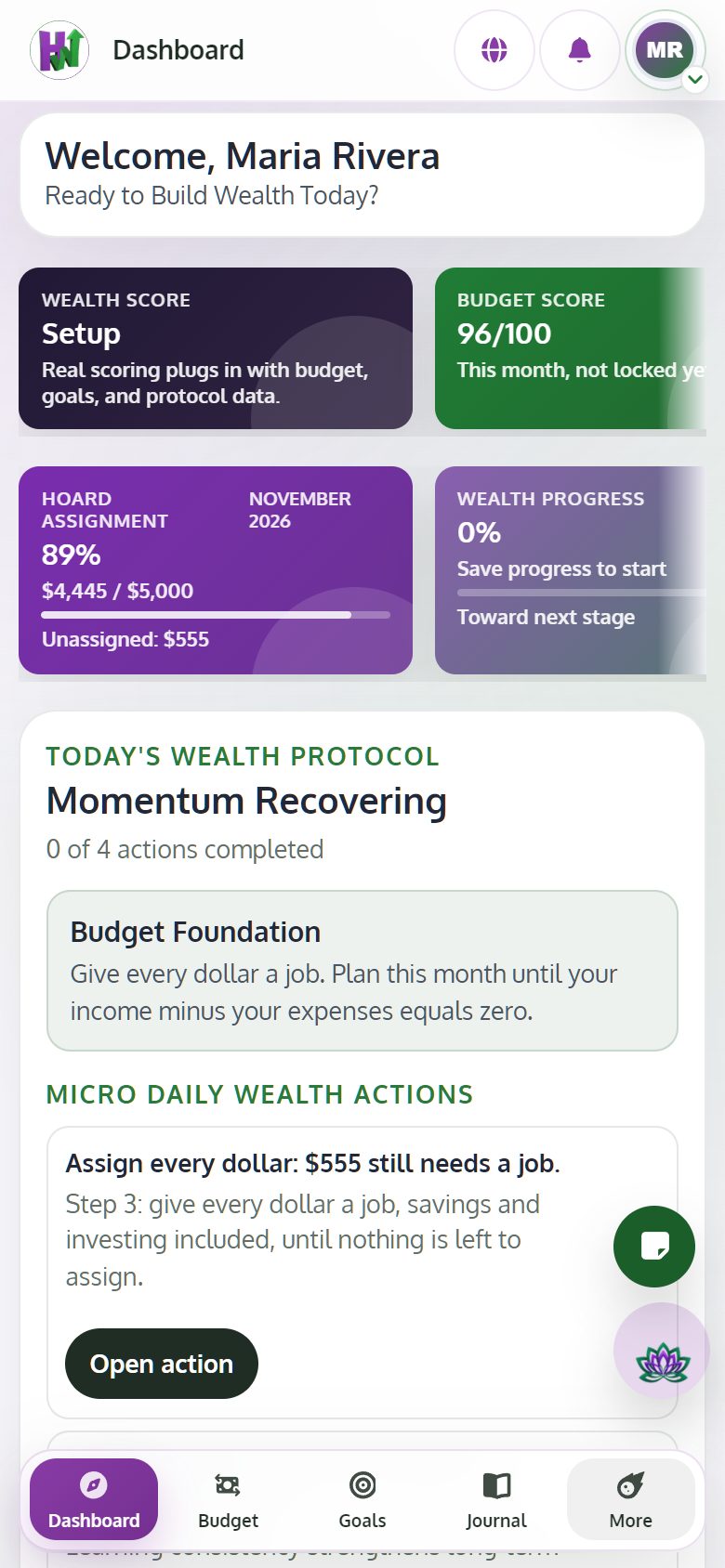
When every line has its actual amount and is marked done, the month closes. Closed months set your Wealth Path stage and your Budget Score, and they show whether your floor is still realistic.
Planned and Actual for every line, due days and notes, in month, week, timeline and calendar views.
List your gig app, tips, side job and seasonal work as separate income sources. The free plan has one income source.
Plan any future month, copy last month's plan and set recurring items, so a busy season can carry a slow one. On the free plan, next month opens in the last 5 days of the month.
Tells you where the next extra dollar goes: Emergency Buffer, debt, then the emergency fund.
Ask what to do with a good week. It reads your budget and stage and suggests one action; it never moves money or changes the budget.
There is no irregular-income feature in Hoarding Wealth. It doesn't average your pay, forecast next month or hold money back for you. What it does is give you a budget where the floor method is easy to follow and a clear order for extra money.
The app doesn't connect to your bank or your gig apps. You type in what you earned. It also doesn't calculate taxes; if you're self-employed, a tax professional can tell you how much to set aside.
If you need invoicing, business bookkeeping or tax filing for a freelance business, use a tool built for that alongside your personal budget.
Yes. You plan the month on the amount you can count on, usually your lowest normal month, and give any extra money a job when it arrives. The app has no special irregular-income mode; you follow this method in its regular zero-based budget.
Your lowest normal month of take-home pay over the last 6 to 12 months: the slowest month that still felt like regular life, not one that was truly unusual.
Give it a job right away, in order: cover anything that ran short, finish the Emergency Buffer, then send the rest to your highest-interest debt. Once bad debt is gone, extra money builds your emergency fund.
At least 3 months of essential expenses, and with income that swings many people aim for the full 6. Hoarding Wealth estimates essentials as the larger of $2,000 or 60% of your monthly income.
Yes, with Premium. Premium lets you add each income source separately and plan any month ahead. The free plan has one income source, so you enter your total take-home pay as one line.
Match each bill to the paycheck before it, give every dollar a job and build a small cushion, one month at a time.
See how it helpsA budget app with no bank connection at all. You type your own numbers and decide before you spend.
See how it helpsA small cushion first, no new charges, then every extra dollar to the highest-interest card, with a tracker that shows your pace.
See how it helpsTake the free Money Personality assessment and plan your first month on your floor, not your best week.
Start free