Wealth Path
Shows whether you have reached the stage where extra mortgage payments make sense.

Hoarding Wealth is a budgeting and personal finance learning app that helps homeowners pay off their mortgage faster at the right time, by putting the decision after bad debt, a full emergency fund and regular investing, and then planning the extra payment in the monthly budget. It has no mortgage payoff tool; it gives you the order and the plan.
Start freeA paid-off home is a powerful idea. No payment and a lot less to worry about if work slows down. So when a little money is left at the end of the month, sending it to the mortgage feels like the responsible thing to do.
The catch is timing. Money sent to the mortgage is hard to get back out: you can't pay a surprise medical bill with home equity unless you borrow against it. If a credit card is still charging high interest, if the emergency fund is thin, or if retirement saving hasn't started, extra mortgage payments can leave you house-rich and cash-poor. The question isn't whether paying off the house early is good. It's whether it's your next step yet.
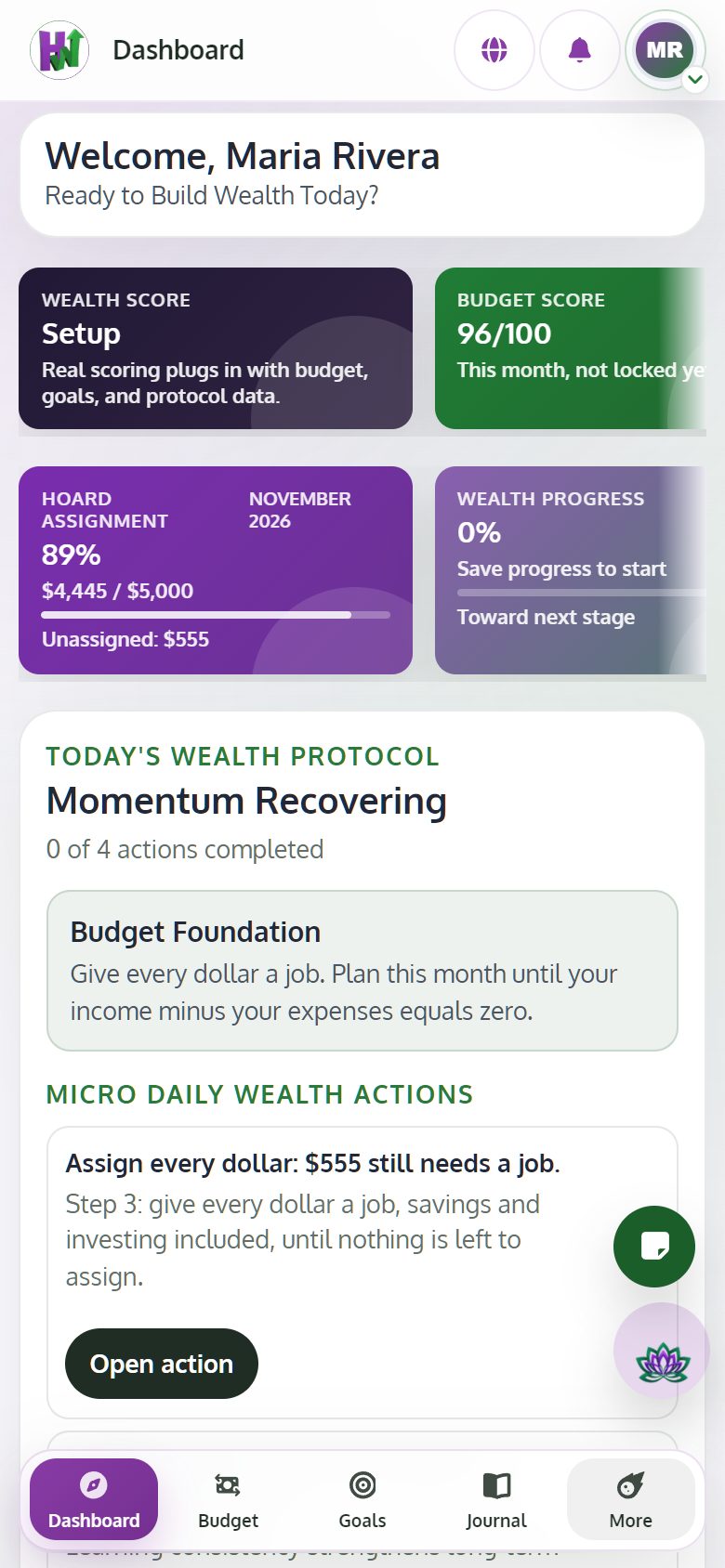
Your Wealth Path follows one order: Budget, Debt, Emergency fund, Investing, then Wealth. Paying the mortgage early is a choice for the Wealth stage. It comes after high-interest debt is gone, the emergency fund is full at 6 months of essential expenses, and your regular investing is on track.
Why: Extra principal is a good use of money only when nothing more urgent is waiting for it.
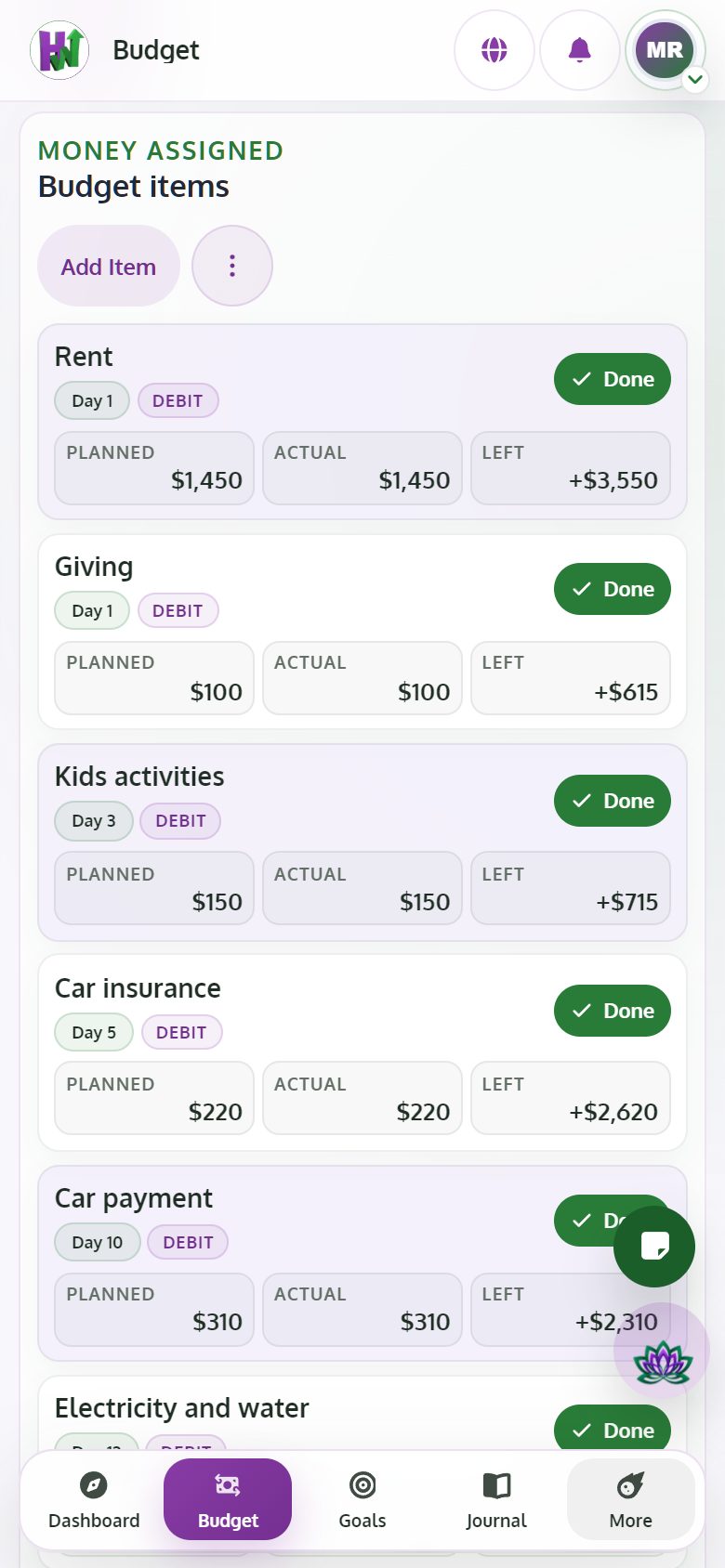
Your regular payment goes in the Housing category, shown in your budget as "Rent / Mortgage", not in the Debt category. That means having a mortgage doesn't keep you in the Debt stage. The Debt stage is about bad debt, like credit cards and high-interest loans.
When you choose to pay extra, add a separate line for it in your zero-based budget each month, with its own Planned and Actual amounts. A practical tip: put this line in "Rent / Mortgage", next to the regular payment, and not in Debt. The app treats any amount in the Debt category as paying off bad debt, so it would show you in the Debt stage when you aren't.
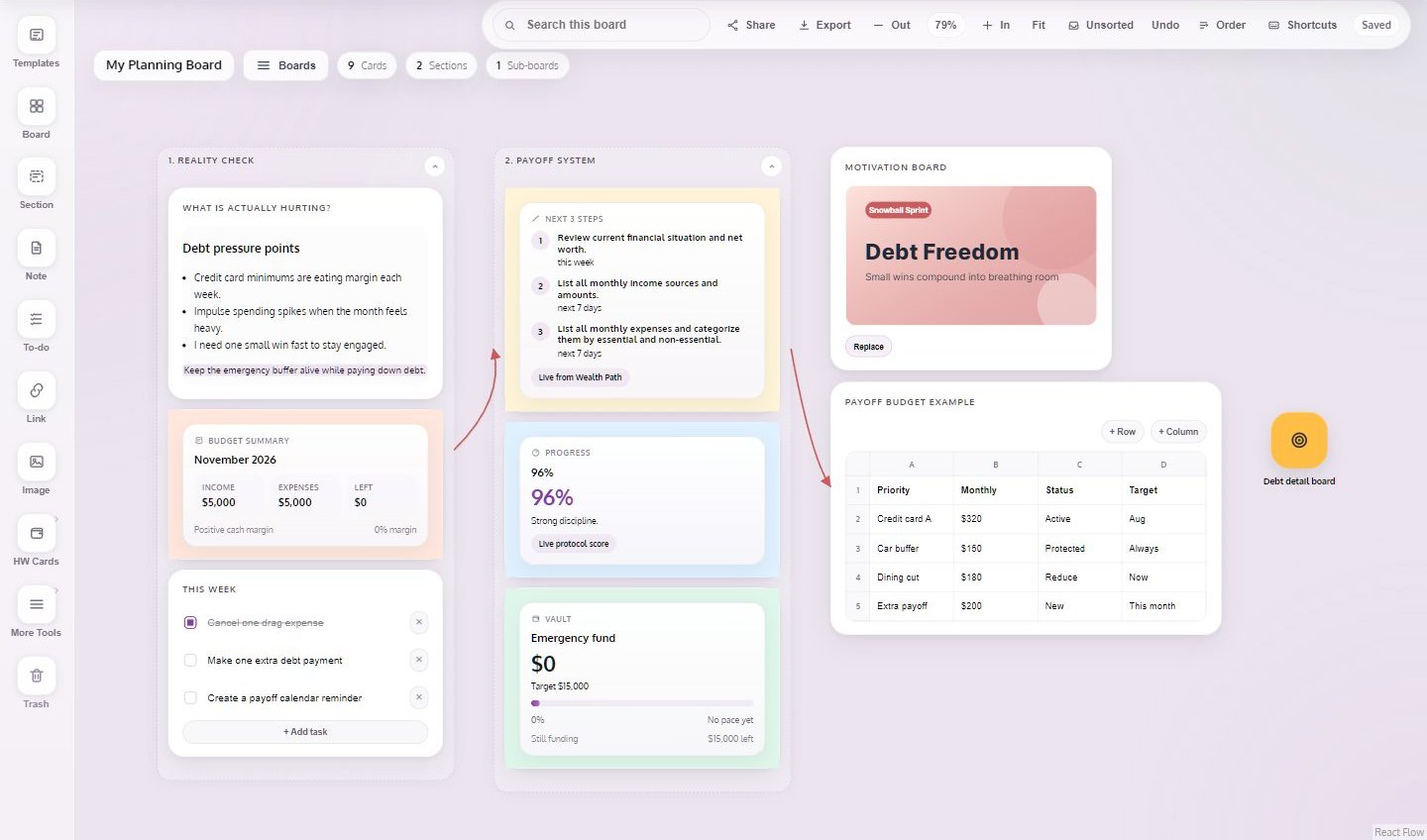
Torn between extra principal and investing more? Lay out both choices side by side on a Planning Board, and ask Wealth Coach to walk you through the trade-offs for your situation. You make the call; the coach explains and suggests.
Shows whether you have reached the stage where extra mortgage payments make sense.
A line for extra principal each month, planned before the month starts and checked off when it's paid.
Your mortgage and any extra principal sit here, under Housing, so the mortgage never counts as bad debt.
Talks through paying down the mortgage versus investing, using your budget and stage. It never moves money or changes your plan.
Map out both options visually. Three boards on the free plan; Premium adds unlimited boards.
Check a loan's monthly payment and total interest with taxes, insurance and PMI. Free.
Hoarding Wealth has no mortgage payoff feature. It doesn't track your loan balance or calculate how much interest an extra payment saves. The mortgage calculator shows the payment, total interest and a projection schedule for a loan as written, but it has no extra-payment field. Your lender's statement or online tools can show your payoff date and the effect of extra principal.
Before you send extra money, ask your lender how to mark it as a principal payment and whether your loan has any prepayment terms. The app doesn't connect to your bank or lender and never moves money; you make the payment yourself.
If you want a payoff schedule that includes extra payments, a dedicated mortgage tool will fit better. Hoarding Wealth helps you decide whether it's your next step and make room for it every month.
It depends on your situation, and it's a choice for later. In the Hoarding Wealth method, extra mortgage payments come only after high-interest debt is gone, the emergency fund is full and regular investing is on track. Wealth Coach can help you think it through; you decide.
No. The app's mortgage calculator shows the monthly payment and total interest, including taxes, insurance and PMI, but it has no extra-payment field. Your lender can show how extra principal changes your payoff date.
No. The mortgage belongs in the Housing category, "Rent / Mortgage", not in the Debt category, so it doesn't hold you in the Debt stage.
Put it on its own line in the "Rent / Mortgage" category, next to the regular payment. If you put it in the Debt category, the app reads it as bad-debt payoff and shows you in the Debt stage.
No. Money sent to the mortgage is hard to get back in an emergency. Fill the emergency fund to the full 6 months of essential expenses first, and get regular investing on track.
Get the foundation done first, then save the down payment as its own goal and see when you could be ready.
See how it helpsBuild the foundation that makes a high savings rate possible, then plan and learn for the investing years.
See how it helpsA clear order from your first budget to your first investment, so you always know the next step.
See how it helpsTake the free Money Personality assessment, plan your month and see which stage you are in.
Start free